




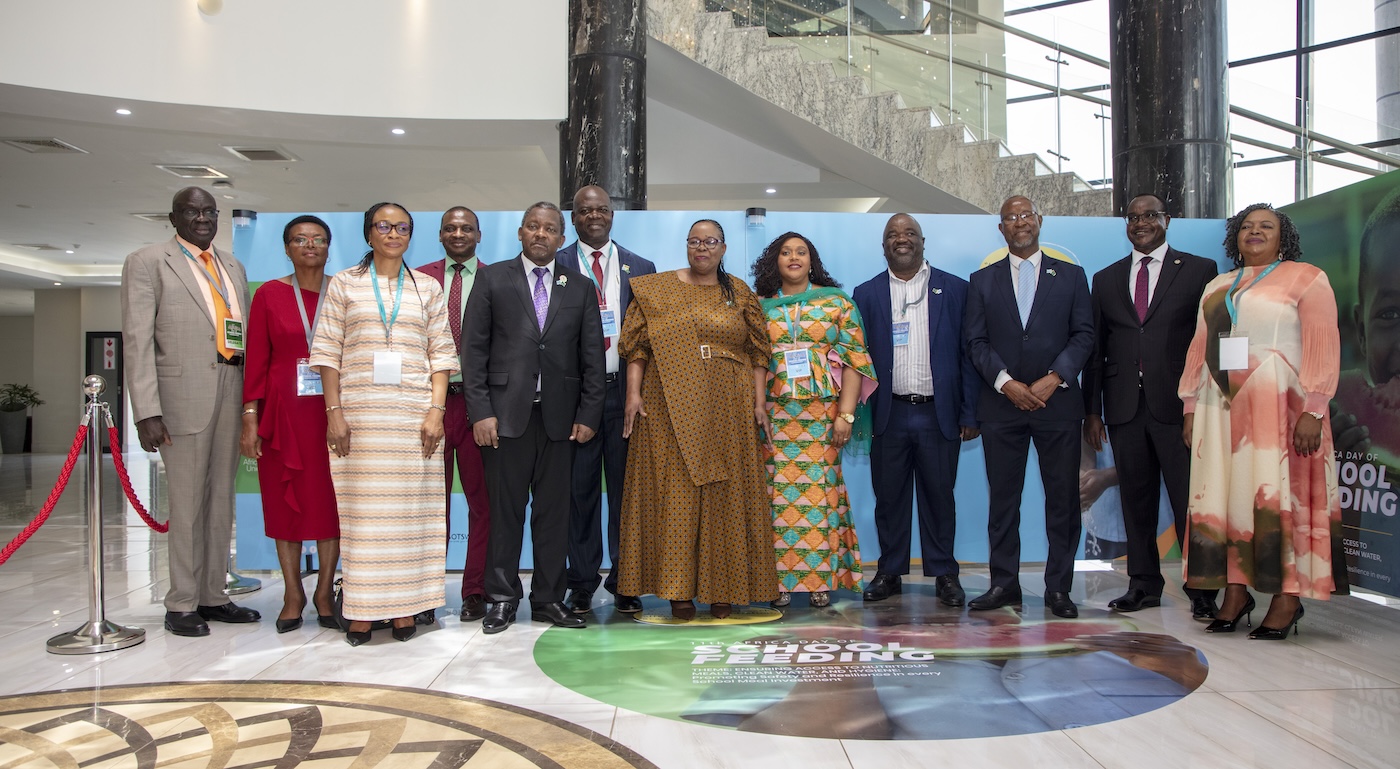
Statement by Prof Gaspard Banyankimbona, Commissioner for Education, Science, Technology and Innovation during the celebrations of the 11th Africa Day of School Feeding (ADSF) in Gaborone, Botswana
Statement by Prof Gaspard Banyankimbona, Commissioner for Education, Science, Technology and Innovation during the celebrations of the 11th Africa Day of School Feeding (ADSF) in Gaborone, Botswana

Salutations
- Your Excellency, DUMA GIDEON BOKO, President of the Republic of Botswana,
- Honorable Minister Kebuang Nono Kgafela-Mokoka, Minister of Child Welfare and Basic Education, Botswana,
- Honorable Ministers here present,
- Excellencies Ambassadors,
- Representatives of the RECS,
- Distinguished Representatives of our Partner Organizations: WFP, UNICEF, FAO, UNESCO, FAWE, AFECN, GIZ, …
- Technical Experts, Scientists, and Policy Leads,
- Ladies and Gentlemen.
Introduction
It is my privilege and honor to address you today at the 11th African Day of School Feeding, here in the vibrant city of Gaborone. On behalf of the African Union Commission, I extend my heartfelt gratitude to the Government and people of Botswana for hosting this significant gathering, and for their steadfast commitment to advancing the wellbeing of Africa’s children. I would also like to warmly congratulate Botswana on the remarkable milestone of 60 years of providing school meals—a testament to their enduring dedication to nurturing generations of learners and promoting inclusive development across the nation.
The Importance of This Year’s Theme
This year’s theme, “Ensuring Access to Nutritious Meals, Clean Water, and Hygiene: Promoting Safety and Resilience in Every School Meal Investment,” could not be timelier. As we convene here, we reflect on the remarkable progress made across our continent. School feeding programmes have reached over 86 million children, and investments from Member States have nearly doubled within the past decade. Furthermore, reports indicate that for every dollar invested in school feeding, there is an economic return of up to $9 through improved health, education, and local agricultural development. These achievements are a testament to our collective resolve to nurture the next generation of African leaders, scientists, teachers, and innovators.
Challenges and Opportunities Ahead
The African Union’s Theme of the Year 2026, “Assuring Sustainable Water Availability and Safe Sanitation Systems to Achieve the Goals of Agenda 2063”, challenges us to deepen our collaboration across sectors and countries. Clean water and safe sanitation are not luxuries; they are essential pillars for health, dignity, and effective learning. When we invest in nutritious meals and WASH (Water, Sanitation, and Hygiene)—in our schools, we do more than improve attendance and learning outcomes; we build resilience, foster gender equality, and lay the foundations for sustainable development.
Home-Grown School Feeding: A Model for Progress
Across Africa, the Home-Grown School Feeding model stands as a beacon of hope and innovation. By sourcing food locally and integrating agricultural development, we stimulate rural economies, empower smallholder farmers, and drive inclusive growth. When these programmes are paired with robust WASH initiatives, we ensure that our children not only have food to eat, but also have safe water to drink and clean facilities to learn in. This integrated approach is essential for realizing the aspirations of Africa’s Agenda 2063.
Call to Action: Investing in Africa’s Future
Ladies and Gentlemen, the future of Africa depends on the investments we make in our children today. We must continue to advocate stronger policies, increased domestic financing, and innovative partnerships. We must break silos and foster collaboration between education, health, agriculture, and water sectors. We must listen to the voices of teachers, parents, and most importantly our children themselves.
Conclusion and Commitment
Let us use this gathering to celebrate our successes, share lessons, and co-create solutions to the challenges that remain. I implore Member States to reaffirm their commitment to ensuring that every child in Africa receives a safe, nutritious meal, clean water, and the opportunity to thrive.
In closing, I call upon all present—governments, partners, civil society, and the private sector—to join hands in building resilient, inclusive, and sustainable school feeding systems. Together, we can transform lives, strengthen communities, and shape a prosperous future for Africa.
Thank you, and let us continue to inspire, innovate, and invest in our children, the heart of Africa’s development.
Department Resources
Mapping Exemplars of Good Practice In Foundational Literacy and Numeracy in AU Member States
Science, Technology and Innovation Strategy for Africa STISA 2034
"Driving Africa's Future"
AFRICAN CONTINENTAL TVET STRATEGY 2025-34
Sustainable Development, Social Justice and Employability for All
The African Union Commission (AUC) envisions “an integrated continent that is politically united based on the ideals of Pan Africanism an
Highlights of the cooperation with the GIZ-project “Support to the African Union on Migration and Displacement”
Violent extremism is a global issue.
Agenda 2063 is Africa’s development blueprint to achieve inclusive and sustainable socio-economic development over a 50-year period.
The African Union Commission (AUC), through the Department of Health, Humanitarian Affairs and Social Development, has launched the S
8 YEARS SERVING AFRICA
Leading a Transformative and Impact Oriented Journey