



TALKING POINTS OF H.E MOSES VILAKATI COMMISSIONER FOR AGRICULTURE, RURAL DEVELOPMENT, BLUE ECONOMY AND SUSTAINABLE ENVIRONMENT
TALKING POINTS OF H.E MOSES VILAKATI COMMISSIONER FOR AGRICULTURE, RURAL DEVELOPMENT, BLUE ECONOMY AND SUSTAINABLE ENVIRONMENT
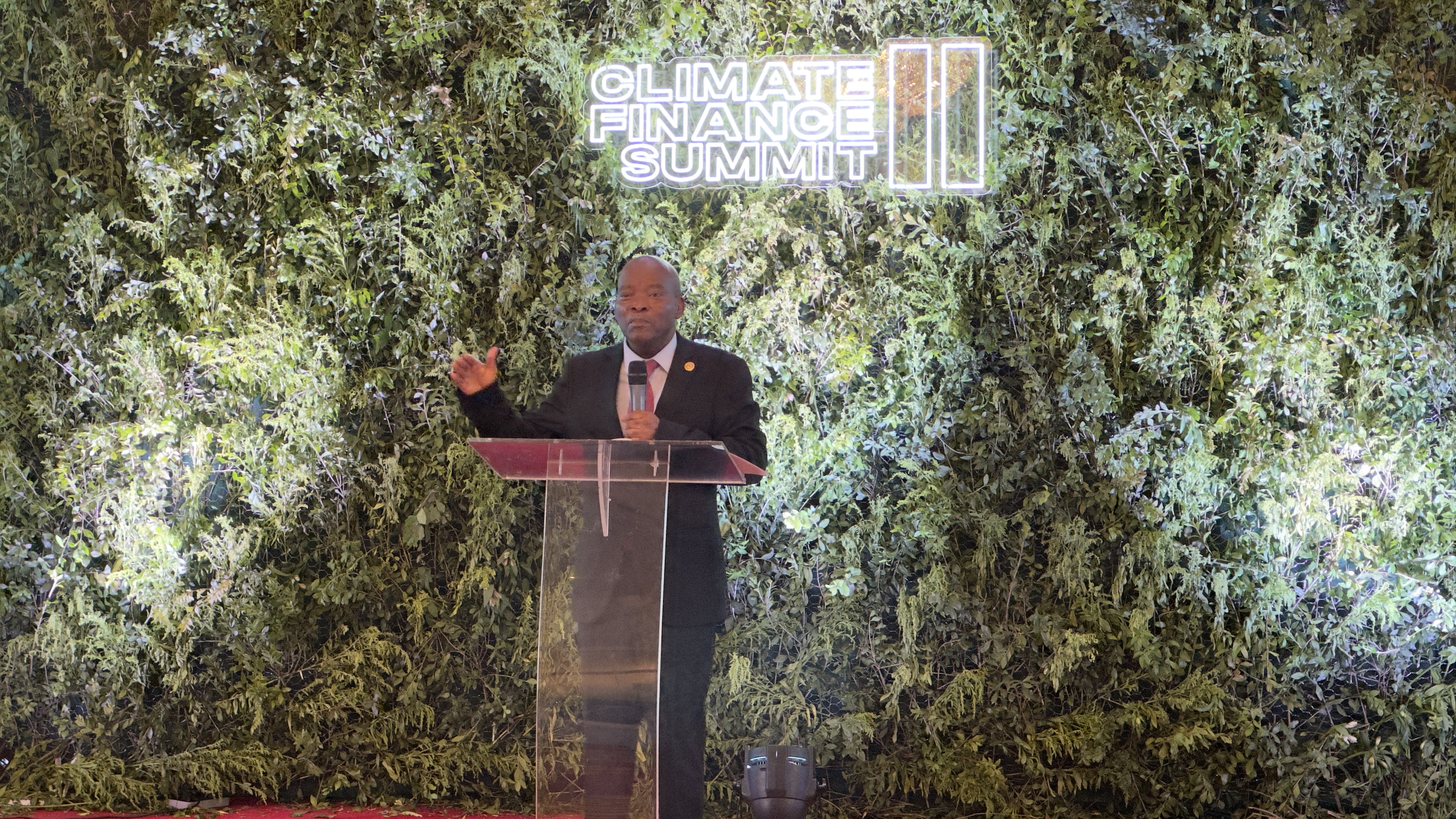

Opening address for
Climate Finance Summit
“Landscape to Legacy: Ethiopia’s Climate Finance Path to COP32”
5 March 2026:
Distinguished Ministers,
Excellencies,
Leaders from the private sector and financial institutions,
Development partners,
Colleagues and friends,
Good morning.
- It is a great honour to join you today at this important Climate Finance Summit, particularly at such a pivotal moment for Ethiopia, for Africa, and for the global climate agenda.
- Allow me first to commend FSD Ethiopia and all partners involved in convening this dialogue. Bringing together policymakers, financial institutions, investors, and development partners is essential if we are to move climate finance discussions from aspiration to implementation. And that is precisely the challenge before us.
- Across Africa, we are no longer asking whether climate finance is needed. We know it is. The question today is: how do we mobilize climate finance at the scale required — and how do we ensure that it translates into real investments that support Africa’s development priorities?
- Africa’s climate reality is that it contributes the least to global emissions, yet remains among the most vulnerable to climate change. At the same time, our continent holds some of the world’s greatest opportunities for climate solutions. Africa possesses:
- vast renewable energy potential,
- significant natural capital,
- and a rapidly growing population of entrepreneurs and innovators.
- These are not only environmental assets — they are economic opportunities. If mobilised effectively, climate investment in Africa can support:
- energy security,
- sustainable industrialization,
- food system resilience,
- and long-term economic transformation.
- However, realizing this opportunity requires something very specific: capital — and capital at scale.
- Despite the growing global focus on climate finance, we have a finance gap – Africa continues to receive only a small share of global climate investment.
- In many African countries, climate finance flows remain heavily dependent on international public finance and grant-based funding.
- While concessional finance remains important, it is clear that public finance alone cannot meet the scale of investment required.
- We must therefore unlock a far larger role for:
- domestic financial systems,
- institutional investors,
- private capital markets,
- and blended finance structures.
- In short, the challenge before us is mobilizing private capital at scale.
- One of the most powerful tools available to us is the development of sustainable capital markets. Around the world, instruments such as:
- green bonds,
- sustainability-linked bonds,
- climate-focused investment funds,
- and blended finance vehicles are helping channel capital toward climate solutions. Africa must fully participate in this transformation.
- In my previous role as Minister in Eswatini, I had the privilege of supporting initiatives aimed at strengthening green capital market development and sustainable investment frameworks.
- These experiences reinforced a critical lesson: When the right policy frameworks, financial institutions, and market infrastructure come together, sustainable finance can move rapidly from concept to reality.
- This is why initiatives like the development of Ethiopia’s capital markets and sustainable finance frameworks are so important.
- They are not simply technical reforms. They are foundations for mobilizing investment at scale.
- Congratulations to the Ethiopian Stock Exchange and the Capital Markets Authority for their successful and fruitful work in this regard. Ethiopia stands at a particularly important moment. A leadership moment for Ethiopia
- The country is preparing to host COP32 in 2027, which will place Ethiopia — and Africa — at the center of the global climate dialogue.
- Hosting COP is not only a diplomatic milestone. It is also an opportunity. – An opportunity to:
- demonstrate African leadership in climate solutions,
- showcase investment opportunities across the continent,
- and strengthen Africa’s voice in shaping the future global financial architecture.
- Prime Minister Abiy Ahmed has already highlighted key priority areas that Ethiopia intends to advance in the lead-up to COP32 — including Artificial Intelligence, carbon markets and carbon credits, and climate finance.These priorities are particularly relevant for Africa’s development pathway.
- Artificial Intelligence has the potential to transform how we monitor climate risks, manage natural resources, and improve agricultural productivity.
- Carbon markets and carbon credit mechanisms present an opportunity for African countries to unlock value from their natural assets while incentivizing conservation and sustainable land use.
- And climate finance — perhaps the most critical pillar — will determine whether these opportunities can be scaled into meaningful investments that support resilient and inclusive development.
- Together, these priorities point to a future where technology, environmental stewardship, and financial innovation come together to drive sustainable growth.
- And this brings me to a central point: Climate finance should not be seen only as a response to climate change — it must be understood as one of the most powerful engines for Africa’s economic transformation in the decades ahead.
- I find the theme of this year’s summit particularly powerful: “from Landscape to Legacy.”
- Understanding the landscape is important. But what truly matters is the legacy we leave behind. A legacy of:
- stronger financial institutions,
- deeper capital markets,
- investable climate projects,
- and meaningful partnerships between governments, investors, and development partners.
- This legacy must be built not through declarations, but through transactions, investments, and projects on the ground.
- Achieving this will require collaboration across multiple actors. Governments must continue strengthening policy frameworks and investment environments.
- Development partners must continue to deploy concessional finance strategically to crowd in private capital.
- Financial institutions must develop innovative instruments and structures that mobilize long-term investment.
- And the private sector must play a central role — not only as investors, but also as innovators and implementers of climate solutions.
- As we move toward COP32, this is Africa’s Moment Africa has an opportunity to shape the global conversation on climate finance. Our message must be clear:
- Africa is not only a continent of climate vulnerability. Africa is a continent of climate opportunity.
- But unlocking this opportunity requires a financial system capable of mobilizing capital at the scale and speed that the moment demands.
- That is the work before us - and that is why gatherings such as this summit are so important.
CONCLUSION
- Let me conclude by congratulating Ethiopia for the leadership it is showing in preparing for COP32 and for convening these discussions today.
- I encourage all participants to use this summit not only as a forum for dialogue, but as a platform for building partnerships and identifying concrete actions that can accelerate climate finance mobilization across Africa.
- If we succeed, the legacy we build today will extend far beyond this room. It will shape the future of sustainable development across our continent.
I thank you for your kind attention and look forward to a fruitful outcome
Department Resources
In line with the Africa Regional Strategy for Disaster Risk Reduction
November 2017
Strategic Intervention Axis 1: Enhancing leadership, governance and political commitment
The African Union Commission (AUC) envisions “an integrated continent that is politically united based on the ideals of Pan Africanism an
Highlights of the cooperation with the GIZ-project “Support to the African Union on Migration and Displacement”
Violent extremism is a global issue.
Agenda 2063 is Africa’s development blueprint to achieve inclusive and sustainable socio-economic development over a 50-year period.