



Opening Statement by H.E. Amb. Amma Twum-Amoah, AUC Commissioner HHS, at the African Union High-Level Side Event At CSW 70
Opening Statement by H.E. Amb. Amma Twum-Amoah, AUC Commissioner HHS, at the African Union High-Level Side Event At CSW 70
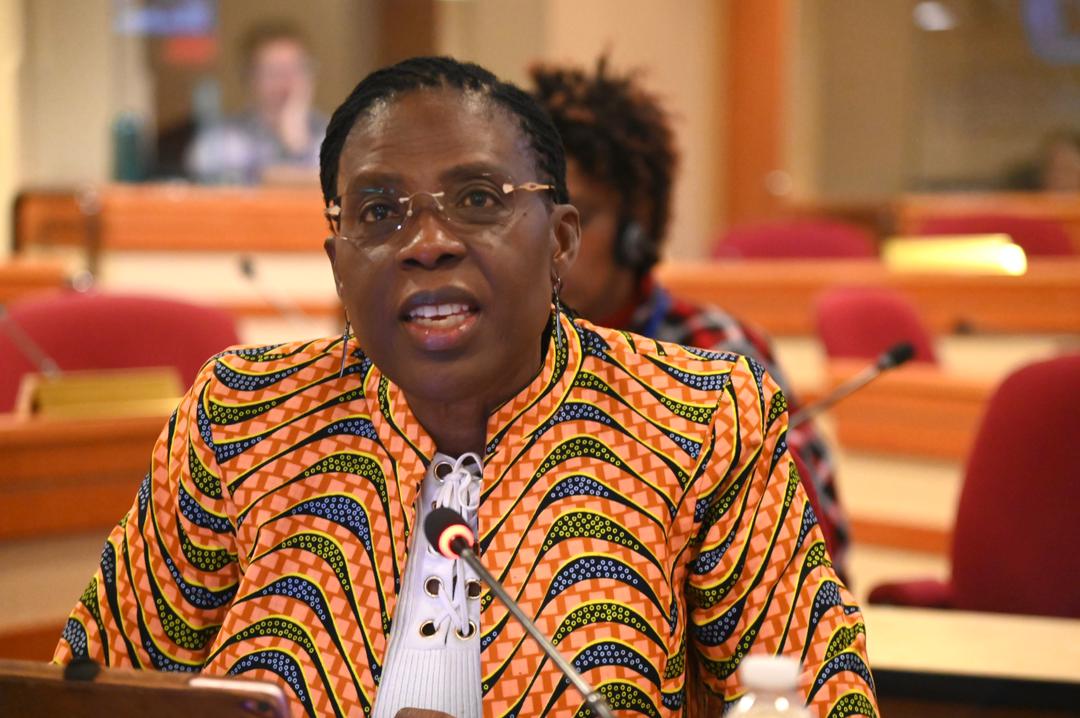

THEME: EXPANDING OPERATIONALISATION OF THE AU ACCOUNTABILITY FRAMEWORK TO STRENGTHEN LEGAL AND COMMUNITY JUSTICE SYSTEMS TO PROTECT GIRLS AGAINST CROSS-BORDER TRAFFICKING, VIOLATIONS AND EXPLOITATION
VENUE: AFRICAN UNION PERMANENT OBSERVER MISSION CONFERENCE CENTER, NEW YORK, 17th MARCH, 2026
HONOURABLE MINISTERS,
EXCELLENCIES,
DISTINGUISHED GUESTS,
LADIES AND GENTLEMEN,
I bring you warm fraternal greetings from the Chairperson of the African Union Commission, H.E. Mahmoud Ali Youssouf.
It is a great honour to lead the African Union delegation to the 70th Session of the Commission on the Status of Women here in New York. I am equally pleased to convene this High-Level Side Event, which focuses on expanding the operationalisation of the African Union Accountability Framework to strengthen legal and community justice systems in order to protect girls from cross-border trafficking, violations and exploitation.
Allow me at the outset to warmly welcome all of you - partners, advocates, policymakers and champions of gender equality - who have joined us today. Your presence reflects a shared commitment to protecting children from abuse, exploitation, neglect and violence, and to ensuring that every girl is afforded the dignity, protection and opportunity she deserves.
Our assembling today is prompted by a sobering reality that demands urgent and decisive action.
Over the past decade, the African Union and its Member States have made significant progress in strengthening legal and policy frameworks that advance gender equality and protect the rights of women and children. From the Maputo Protocol to the African Charter on the Rights and Welfare of the Child, Africa has demonstrated leadership in establishing some of the most progressive normative frameworks in the world.
However, progress on paper must translate into protection in practice.
Traffickers and exploiters have proven to be highly adaptable, exploiting jurisdictional “grey zones” across borders to evade prosecution and continue their crimes. As national laws have been strengthened within Member States, criminal networks have simply shifted their operations across borders, exploiting gaps in coordination and enforcement.
In this context, girls are particularly vulnerable.
Their vulnerability is further compounded by armed conflict, humanitarian crises, climate-induced displacement, labour migration and deeply entrenched harmful social norms. These intersecting challenges create environments in which exploitation thrives and justice becomes more difficult to deliver.
The forms of abuse we are confronting are both multifaceted and deeply disturbing. They include cross-border female genital mutilation (FGM), forced child marriage, commercial sexual exploitation, online child sexual exploitation and abuse, illegal adoption, and even the recruitment of girls into armed conflict.
We are also witnessing a concerning rise in domestic servitude, a reality that many of our societies know all too well. These abuses are not merely statistics; they represent a profound assault on the dignity of our girls, the moral fabric of our societies and the future of our continent.
In response to these challenges, the African Union Framework to End Harmful Practices, developed at the request of AU Heads of State and Government in 2024, serves as a critical mechanism to ensure that political commitments translate into measurable and tangible outcomes.
Through this Framework, the African Union Commission is able to track progress by Member States in real time, identify critical gaps and support targeted interventions through data-driven monitoring and accountability mechanisms.
I am pleased to note that since 2025, the Accountability Framework has already been operationalised in six countries - Djibouti, Ethiopia, Kenya, Nigeria, Senegal and Zambia. This represents an important step forward, but clearly much more remains to be done.
Ladies and Gentlemen,
The theme of CSW70 - “Access to Justice” - compels us to look beyond legal institutions alone.
Justice must not begin and end in the courtroom. For a girl who has been trafficked across borders, justice must be a continuum - from rescue and protection to legal accountability, and ultimately, to reintegration into society with sustained psychosocial support and opportunities for recovery and empowerment.
In this regard, allow me to highlight four key priorities.
First, strengthening formal legal systems.
We must accelerate the harmonisation of national and regional legal frameworks to eliminate the inconsistencies that traffickers exploit. By aligning laws across borders and strengthening judicial cooperation, we can dismantle trafficking networks and close the safe havens that allow exploiters to evade justice.
Second, integrating community justice mechanisms.
Across Africa, traditional and religious leaders often serve as the first point of contact for justice within communities. Integrating these community-based justice mechanisms with formal judicial systems will help create a continuum of justice that is culturally grounded, accessible and survivor-centred.
Third, investing in justice systems that protect girls.
This requires greater domestic and international investment in integrated justice infrastructure, investments that ensure law enforcement, social protection services, legal aid and psychosocial support systems are equipped to respond rapidly and effectively to the needs of adolescent girls.
Fourth, strengthening partnerships.
The challenges we face are global in nature. No country or institution can address them in isolation. Strong partnerships between governments, regional institutions, civil society organisations and international partners will be essential to delivering sustainable and transformative outcomes.
Distinguished Guests,
The protection of girls is not only a matter of policy, it is a matter of justice, dignity and the future of our societies.
We must, therefore, act with urgency, resolve and unity of purpose.
When we succeed, we do more than protect vulnerable children, we create a future in which every African girl is free to thrive, free to dream and free to lead.
For me, this is not simply a professional commitment; it is a deeply personal conviction.
I wish us fruitful and productive deliberations, and the African Union Commission looks forward to translating the outcomes of this important dialogue into concrete actions that will safeguard the lives and futures of girls across our continent.
I thank you.
Topic Resources
Agenda 2063 is Africa’s development blueprint to achieve inclusive and sustainable socio-economic development over a 50-year period.
The African Union Commission (AUC), through the Department of Health, Humanitarian Affairs and Social Development, has launched the S
8 YEARS SERVING AFRICA
Leading a Transformative and Impact Oriented Journey