


Webinar on Small and Medium Enterprises (SMEs) Development in Africa
December 22, 2020
English
“The Road towards a Continental Recovery Strategy for SMEs in the post-COVID-19 era”

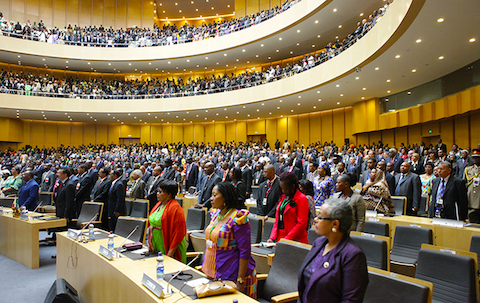
Promoting Africa’s growth and economic development by championing citizen inclusion and increased cooperation and integration of African states.

Promoting Africa’s growth and economic development by championing citizen inclusion and increased cooperation and integration of African states.
Agenda 2063 is the blueprint and master plan for transforming Africa into the global powerhouse of the future. It is the strategic framework for delivering on Africa’s goal for inclusive and sustainable development and is a concrete manifestation of the pan-African drive for unity, self-determination, freedom, progress and collective prosperity pursued under Pan-Africanism and African Renaissance.
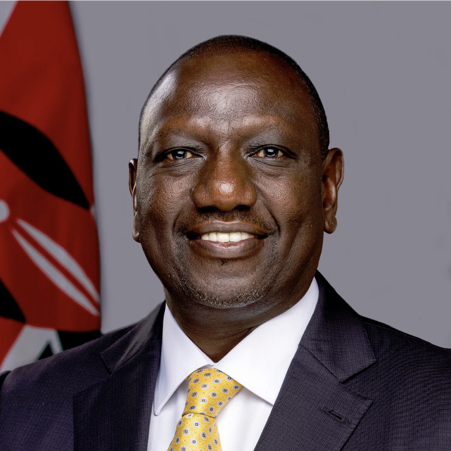
H.E President William Samoei Ruto (PhD), President of the Republic of Kenya and the African Union Champion on Institutional Reform. H.E. Ruto was appointed during the 37th Assembly of Heads of State and Government in February 2024 to champion the AU Institutional Reform process taking over from the H.E Paul Kagame, President of the Republic of Rwanda who led the implementation of the reform process since 2016.



The AU offers exciting opportunities to get involved in determining continental policies and implementing development programmes that impact the lives of African citizens everywhere. Find out more by visiting the links on right.
Element visible on Department Page
“The Road towards a Continental Recovery Strategy for SMEs in the post-COVID-19 era”
The African Union’s Economic, Social and Cultural Council (AU-ECOSOCC) yesterday convened its Second Ordinary Session of the third Permanent General Assembly (GA).
Johannesburg, December 21, 2020 - The African Risk Capacity (ARC) Group is proposing a new insurance mechanism to African countries in the South West Indian Ocean (SWIO) region to cope with the devastating effects of the tropical cyclones.
Addis Abeba, le 21 décembre 2020 : Le Président de la Commission de l'Union africaine (CUA), S.E.M. Moussa Faki Mahamat a décidé de déployer des Missions d'Observation Electorale (MOEUA) en Républiques Centrafricaine (RCA) et du Niger dans le cadre des élections générales prévues le 27 décembre 2020 dans ces deux pays.
Addis Abeba, le 20 décembre 2020. Le Président de la Commission de l’Union africaine, S.E.M. Moussa Faki Mahamat est vivement préoccupé par l’évolution de la situation politique et sécuritaire en République centrafricaine et condamne avec la plus grande fermeté la recrudescence des actes de violence dans certaines régions du pays ayant occasionné des pertes en vies humaines et visant à perturber le processus électoral en cours. Il condamne par ailleurs, toute collusion entre certains acteurs politiques et des groupes armés.
Excellency President Ismael Omar Guelleh, President of the Republic of Djibouti,
Your Excellency Dr Abdallah Hamdok, Prime Minister of the Republic of Sudan and Current Chairman of IGAD,
Your Excellencies Heads of State and Government,
Honourable Ministers, members of the diplomatic corps,
Mr Executive Secretary of IGAD,
Ladies and Gentlemen,
Today, the Horn of Africa finds itself in a a very particular situation, and IGAD, its Regional Organization is experiencing more than one tough challenge.
18 December 2020, Addis Ababa: It is with deep emotion that the Chairperson of the African Union Commission, H.E Moussa Faki Mahamat, learnt about the passing of former President Pierre Buyoya, that occurred yesterday in Paris.
The Chairperson of the Commission mourns the loss of a statesman who worked tirelessly for peace and with exceptional commitment both in his country and for the Continent as High Representative of the Chairperson of the African Union Commission for Mali and the Sahel region, until last November.
9th Strategic Stakeholders Retreat 16th-17th December 2020, Virtual Event
The African Union Commission organized Virtually the 9th Industry Stakeholders Strategic Retreat.
The shortcomings and scarcity of data on migration have limited the capacity of the African Union (AU) Member States to conceive coherent migration policies. Furthermore, the informal character of migratory movements, the porosity of borders and the complexity of the collection of data on human mobility at the continental level, going from and to Africa, have made the management of migratory movements very difficult.

