









Designing second phase of PIDA Garners Pace
Designing second phase of PIDA Garners Pace
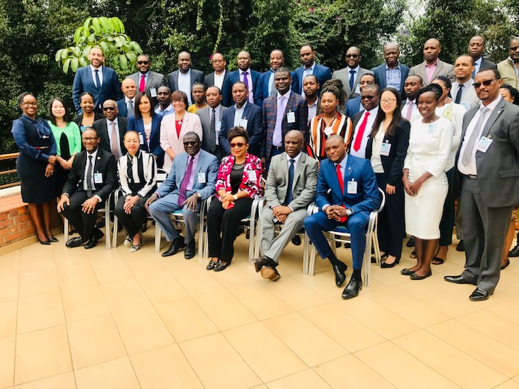
Kigali, Rwanda, 11 September 2019: The African Union Commission (AUC) organized a stakeholders meeting on 10 and 11 September in Kigali, Rwanda to deliberate on the development processes of the next phase of the Programme for Infrastructure Development in Africa (PIDA) which will focus on smart and integrated corridor approaches; renewable source of energy; job creation, Youth and Gender sensitivity potentials of projects; and digitalization.
Speaking on behalf of the Mr. Cheikh Bedda, the Director for Infrastructure and Energy, Mr. Jacques Mukwende highlighted that the process of the preparation of the second phase of the PIDA PAP process should be very inclusive of all stakeholders namely Member States of the African Union, the Regional Economic Community (RECs), the African institutions, the civil society, the private sector, the youth and the women, African and non-African development partners.
Mr. Mukwende stated that the AUC is currently conducting an independent review of the implementation the PIDA Priority Action Plan (PAP). The analysis will provide the basis and way forward in the formulation of the second phase of the PIDA programme.
“As part of the mid-term review and as a way to lay a strategic foundation for African infrastructure development for the next decade, a study that forecasts the current and future infrastructure needs will be developed, as vital input to the PIDA-PAP 2 project selection process. The MTR together with the Market and Demand Study (MDS) will form a conceptual basis and strategic framework for the development of the selection criteria for PIDA-PAP 2,” Mr. Mukwende said.
On his part, Mr. Adama Deen, Senior Advisor on Infrastructure at the African Union Development Agency (AUDA-NEPAD) gave a historic overview of PIDA’s initiation and current implementation status.
Citing this as an important reference on the path to PIDA PAP 2, Mr. Deen said, “the second phase of PIDA needs to include upstream and downstream activities, using an integrated approach that looks at connectivity and reaches the last rural mile”.
He concluded his remarks by stating the importance of the studies being conducted by the consultants and commenting on the need to ensure the selection criteria is inclusive and multi-dimensional.
Speaking on behalf of the African Development Bank, Mr. Mike Salawou, Division Manager, stressed the importance of an effective stakeholders’ consultation in the design and preparation of PIDA PAP 2, which he reminded, should be built on the experience and lessons learnt from PIDA PIDA PAP 1.
He called on stakeholders to pay particular attention to the project selection criteria to be adopted in order to realize a robust and realistic list of priority projects reflecting actual priorities of national governments. Selection criteria should also focus on projects that will be attractive to investors and financiers.
Mr. Salawou highlighted the need to assess the capacity needs within the AUC to be in place to deliver on PIDAP PAP 2 as soon as Heads of State approve it in January 2021 to avoid the implementation lag experienced after approval of the first phase of PIDA PAP.
In his concluding remarks, Mr Salawou reassured the stakeholders of the Bank’s unwavering support to the AU’s infrastructure agenda including PIDA PAP 2 and the close relationship between the Bank, AUC, AUDA-NEPAD and other stakeholders in this regard.
Meanwhile, representing the United Nations Economic Commission for Africa (UNECA), Mr Robert Lisinge noted the emerging issues in PIDA PAP implementation.
“Member States and RECs need to be engaged more actively, and lessons can be learnt from China’s implementation of the Belt and Road initiative need to be applied to PIDA,” Mr. Lisinge opined.
He reiterated the need for AU member States be more proactive in developing capacities for planning and implementing projects. He also highlighted the need for alignment with other Development Agendas including the SDGs, especially SDG 9 which emphasizes the need to build resilient infrastructure to promote inclusive and sustainable industrialization and innovation.
In conclusion, he highlighted the role of digitalization in planning and manning Africa’s infrastructure assets as well as ensuring that PIDA is fit for purpose.
The meeting provided a platform for PIDA implementing partners and all stakeholders to go through the development processes of the next phase of PIDA, focusing mainly on the Integrated Corridor Approach, Mid Term Review, Market and Demand Study and the African Network for Women in Infrastructure (ANWIn). It also provided an avenue for all consultants of the various studies to sit and align their objectives and timelines.
The meeting is organized by the African Union Commission in collaboration AUDA-NEPAD Agency, the UN Economic Commission for Africa and the African Development Bank. More than 40 participants from continental organizations (i.e. AUC, UNECA, AUDA-NEPAD, AfDB), RECs, Specialised Institutions (SIs), Academia, specialized institutions, journalists, gender specialists, youth and international partners were in attendance.

Department Resources
WE, the Heads of State and Government of the African Union Member States (Full List of Attending Heads of State and Government), gathered
AFRICA’S DEVELOPMENT
D Y N A M I C S
INFRASTRUCTURE, GROWTH AND TRANSFORMATION
OVERVIEW
The African Guidelines on Integrating Data Provisions in Digital Trade Protocols are part of the broader framework established by the AfC
This Data Policy Framework aims to strengthen and harmonise data governance frameworks in Africa and thereby create a shared data space a
The African Union Commission (AUC) envisions “an integrated continent that is politically united based on the ideals of Pan Africanism an
Highlights of the cooperation with the GIZ-project “Support to the African Union on Migration and Displacement”
Violent extremism is a global issue.
Agenda 2063 is Africa’s development blueprint to achieve inclusive and sustainable socio-economic development over a 50-year period.
Mapping Exemplars of Good Practice In Foundational Literacy and Numeracy in AU Member States