







Africa Takes a Bold Step Towards Energy Efficiency at Inaugural Continental Conference in Addis Ababa
Africa Takes a Bold Step Towards Energy Efficiency at Inaugural Continental Conference in Addis Ababa

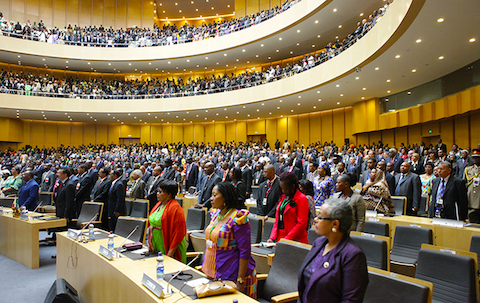
The African Union (AU), through the African Energy Commission (AFREC), together with Ethiopia’s Ministry of Trade and Regional Integration and the Ministry of Water and Energy, successfully hosted the Inaugural African Energy Efficiency Conference (AfEEC) in Addis Ababa from 10-11 December, marking a historic milestone in Africa’s energy transition.
Held under the framework of the African Energy Efficiency Alliance (AfEEA), the conference followed two days of specialised training sessions on 8-9 December, bringing together at least 400 policymakers, regulators, private sector leaders, experts, and development partners committed to advancing Africa's energy transition.
Continental Commitment and Strategic Targets
H.E. Mahmoud Ali Youssouf, Chairperson of the African Union Commission, affirmed that energy efficiency is now recognised as a strategic pillar for Africa’s development, industrialisation, and regional integration. The Chairperson highlighted the continent’s target of improving energy productivity by 12% by 2030 and 50% by 2050, as set in the African Energy Efficiency Strategy and Action Plan (AfEES) adopted by AU Heads of State and Government in 2025.
“Every kilowatt-hour wasted is a school not electrified, a vaccine not safely stored, a business not powered, or a job not created. Energy efficiency is an economic shield, an environmental safeguard, and a strategic pathway to securing Africa’s energy future,” said Chairperson Youssouf.
In his keynote remarks, Mr Adam Farah, Deputy Prime Minister and Vice President of Prosperity Party underscored that the selection of Ethiopia to host the COP32 gives the continent impetus to champion African-led solutions, green growth, and climate justice on the world stage.
“Africa must scale regional power interconnections to enhance grid stability, reduce costs, and unlock cross-border electricity trade. To secure full energy sovereignty we must fundamentally rethink how we produce, distribute, and consume energy,” Said the Deputy Prime Minister.
Energy Efficiency: Africa’s “First Fuel”
Meanwhile, in her welcoming remarks, H.E. Lerato D. Mataboge, Commissioner for Infrastructure and Energy of the African Union Commission (AUC), described energy efficiency as “Africa’s first fuel,” emphasising its potential to deliver immediate, affordable, and tangible benefits. She highlighted that Africa faces a rapidly growing energy demand, with more than 70% of the population still living in energy poverty and energy consumption productivity lagging global standards.
“Energy efficiency represents the fastest and most affordable tool at our disposal to expand access, stabilise power systems, and unlock sustainable growth in Africa,” said Commissioner Mataboge. “Across our power systems, transport networks, industries, buildings, agriculture, and appliances, energy efficiency measures can unlock billions in savings, strengthen African economies, and cut carbon emissions while enabling universal access to modern energy.”
The Commissioner also welcomed the operationalisation of the African Energy Efficiency Alliance (AfEEA), first launched at COP29, as a platform to foster knowledge sharing, policy advocacy, research, and investment for energy efficiency programmes across Africa.
H.E. Kassahun Gofe Balami, Minister of Trade and Regional Integration of Ethiopia, underscored the role of energy efficiency in advancing Africa’s economic integration and renewable energy transition. He noted Ethiopia’s flagship projects, including the Great Ethiopian Renaissance Dam (GERD) and regional interconnections supplying power to neighbouring countries, as part of its commitment to a climate-resilient energy transition.
“Africa has immense, untapped potential. Sustainable energy must be taken as a serious project to enable seamless trade, investment, and regional integration across the continent,” said Minister Balami.
High-Level Ministerial Panel and the African Energy Efficiency Facility
The conference featured a ministerial panel with representatives from South Africa, Malawi, Zimbabwe, Tanzania, Togo, Liberia, Djibouti, Equatorial Guinea, and Seychelles, who shared national experiences, innovative policies, and immediate needs to scale energy efficiency across sectors.
In addition, the African Energy Efficiency Facility (AfEEF) was presented as a key tool to mobilise finance, harmonise policies, and strengthen capacity for implementation of energy efficiency measures.
Launch of the African Energy Transition Strategy
The conference also saw the launch of the African Energy Transition Strategy and Action Plan (ETSAP), a continental roadmap to advance a just and inclusive energy transition. The strategy emphasizes clean cooking, cross-border energy trading, energy efficiency, innovation, and capacity development, setting the foundation for multi-billion-dollar investments across Member States.
The AfEEC concluded with a delivery of a communique reaffirming a collective commitment to advancing energy efficiency initiatives across the electricity, industry, buildings, transport, agriculture and household appliances sub-sectors. The conference reiterated Africa’s target set out in the AfEES to increase the continent’s energy productivity by 50% by 2050 and 70% by 2063 as part of the global pledge to double energy efficiency improvements by 2030.
Notes to Editors:
The African Energy Commission (AFREC) is a specialized agency of the African Union responsible for coordinating and harmonizing energy policy development and implementation across the continent. AFREC's mission is to work with AU member states to promote sustainable energy development through capacity building, data systems, and strategic partnerships.
The African Energy Efficiency Conference follows the adoption of the African Energy Efficiency Strategy and Action Plan (AfEES), endorsed by the African Union Executive Council earlier this year. AfEES outlines over 100 actions across the power, industry, transport, buildings, and agriculture sectors, setting Africa on track to improve energy productivity by 50% by 2050 and 70% by 2063.
For Media Inquiries:
Mr. George Sichinga | Communication Officer | African Energy Commission | African Union Commission E-mail: SichingaG@africanunion.org
Ms. Bezayit Eyoel | Information Analyst | Department of Infrastructure and Energy | African Union Commission E-mail: BezayitE@africanunion.org
Mr. Gamal A. Karrar | Senior Communication Officer | Information and Communication Directorate | African Union Commission E-mail: GamalK@africanunion.org

Department Resources
WE, the Heads of State and Government of the African Union Member States (Full List of Attending Heads of State and Government), gathered
AFRICA’S DEVELOPMENT
D Y N A M I C S
INFRASTRUCTURE, GROWTH AND TRANSFORMATION
OVERVIEW
The African Guidelines on Integrating Data Provisions in Digital Trade Protocols are part of the broader framework established by the AfC
This Data Policy Framework aims to strengthen and harmonise data governance frameworks in Africa and thereby create a shared data space a
The African Union Commission (AUC) envisions “an integrated continent that is politically united based on the ideals of Pan Africanism an
Highlights of the cooperation with the GIZ-project “Support to the African Union on Migration and Displacement”
Violent extremism is a global issue.
Agenda 2063 is Africa’s development blueprint to achieve inclusive and sustainable socio-economic development over a 50-year period.