







Africa Renews Commitment to Eliminate Female Genital Mutilation by 2030
Africa Renews Commitment to Eliminate Female Genital Mutilation by 2030
On 6th February 2026, the African Union, through the Department of Health, Humanitarian Affairs and Social Development, convened a Continental Virtual Event to commemorate the International Day of Zero Tolerance for Female Genital Mutilation (FGM) under the theme: “Towards 2030: No End to FGM Without Sustained Commitment and Investment.”
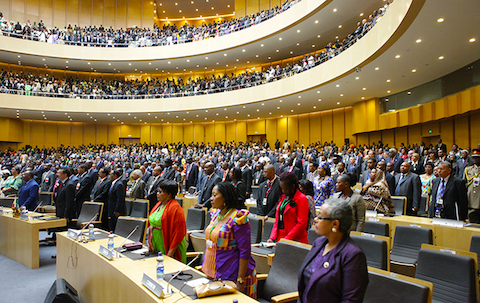
The high-level event brought together Member States, civil society organisations, youth advocates, survivors, and development partners, including UNFPA and UNICEF. The discussions reaffirmed the African Union’s Agenda 2063 commitment to drastically reduce FGM by 2030 and called for sustained commitment and investment from all Member States to end the practice.
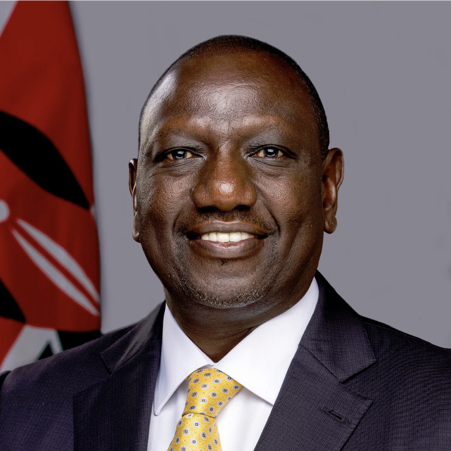
Opening the event, Dr. Olubusayo Akinola, the Head of Division for Social Welfare, Drug Control and Crime Prevention, speaking on behalf of H.E. Ambassador Amma A. Twum-Amoah, Commissioner for Health, Humanitarian Affairs and Social Development, highlighted three key pillars for ending the practice: sustained political will, targeted investment, and community-led transformation, and underscored that the vision of “the Africa We Want” cannot be achieved while girls continue to face physical and psychological trauma before adulthood.
Dr. Akinola reaffirmed the African Union’s continued leadership through the Saleema Initiative and highlighted the role of the AU Accountability Framework on the Elimination of Harmful Practices as a key mechanism for tracking progress, identifying gaps, and translating political commitments into measurable outcomes.
Delivering a keynote address, Hon. Dr. Isata Mahoi, Minister of Gender and Children’s Affairs of Sierra Leone, noted that about two decades ago, FGM was not openly discussed on radio, television, or in public meetings without fear of attack. Today, she said, the issue is widely discussed across different platforms. She shared national experiences and emerging lessons, noting that breaking the silence through public dialogue, media engagement, and community mobilisation has contributed to progress, while underscoring the continued need for comprehensive, culturally sensitive approaches and strengthened accountability.
A dedicated session showcased innovative, youth-led, survivor-informed and CSO interventions, including Men-led led initiatives working to shift social norms and accelerate abandonment of FGM, featuring panellists from civil society and youth movements, alongside a “Saleema Spotlight” by the AU Saleema Youth Ambassador for East Africa.
Participants collectively reinforced the urgency of aligning policy, financing, and community action to accelerate progress toward 2030, including:
- Reinforcing Member State commitment to relevant continental and international obligations, including the Maputo Protocol, and strengthening implementation and enforcement.
- Increasing domestic financing by integrating FGM prevention and response into national budgets, especially within health, education, and protection systems.
- Scaling community-led transformation, including youth leadership, survivor-centred approaches, and engagement with traditional and religious leaders to shift norms sustainably.
- Strengthening accountability and data use through the AU Accountability Framework to track progress and accelerate corrective action where gaps persist.
For further information, please contact:
Dr. Olubusayo Akinola | Head of Social Welfare, Drug Control and Crime Prevention - African Union Commission | E-mail: AkinolaO@africanunion.org, cc: Thundun@africa-union.org MumbaT@africanunion.org StellaS@africanunion.org richardwamimbi@gmail.com | Addis Ababa, Ethiopia
For media Enquiries, please contact:
Godstime Gaius Information and Communication Directorate | African Union Commission | E-mail: GaiusG@africanunion.org | Addis Ababa, Ethiopia
Ms. Janet Faith Ochieng, Communication officer| Information and Communication Directorate | African Union Commission | E-mail: OchiengJ@africanunion.org | Addis Ababa, Ethiopia
Information and Communication Directorate | African Union Commission I E-mail: DIC@africa-union.org |
Web: au.int | Addis Ababa, Ethiopia | Follow Us: Facebook | Twitter | Instagram | YouTube

Department Resources
Strategic Policy Framework and Plan of Action on Ageing
AFRICAN UNION CONTINENTAL CONSULTATION ON SYNTHETIC DRUG SUPPLY REDUCTION EFFORTS TOWARDS ADDRESSING DRUG TRAFFICKING AND ADVANCING CRIME
The purpose of the African Union Accountability Framework on the elimination of harmful practices in Africa is to ensure that good perfor
The African Union Commission (AUC) envisions “an integrated continent that is politically united based on the ideals of Pan Africanism an
Highlights of the cooperation with the GIZ-project “Support to the African Union on Migration and Displacement”
Violent extremism is a global issue.
Agenda 2063 is Africa’s development blueprint to achieve inclusive and sustainable socio-economic development over a 50-year period.