






African Union Commission Hosts Sixth AU UN High-Level Strategic Dialogue on Sustainable Development
African Union Commission Hosts Sixth AU UN High-Level Strategic Dialogue on Sustainable Development

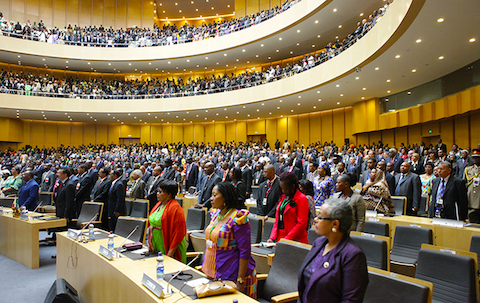
The African Union Commission, under the leadership of H.E. Amb. Selma Malika Haddadi, Deputy Chairperson of the African Union Commission, today hosted H.E. Ms. Amina J. Mohammed, Deputy Secretary General of the United Nations, for the Sixth AU UN High Level Strategic Dialogue on Sustainable Development at the African Union Commission Headquarters in Addis Ababa.
The Dialogue built on the High-Level engagement held on 10 November 2025 and provided a strategic platform to advance AU-UN engagement, cooperation and coordination in support of Africa’s priorities, particularly the implementation of Agenda 2063 under the Second Ten-Year Implementation Plan (STYIP).
The Dialogue was attended by senior leadership of the African Union Commission, including Commissioners responsible of Political Affairs, Peace and Security; Agriculture, Rural Development, Blue Economy and Sustainable Environment; Infrastructure and Energy; Health, Humanitarian Affairs and Social Development; Economic Development, Trade, Tourism, Industry and Minerals; and Education, Science, Technology and Innovation, as well as the Chief Executive Officer of AUDA-NEPAD and the African Union Special Envoy for Women, Peace and Security.
Senior officials of the United Nations system also participated in the Dialogue, including the Special Adviser on Africa to the United Nations Secretary-General, Special Representative to the Secretary General and Head of UNOAU, the Executive Secretary of the United Nations Economic Commission for Africa, UNDP's Assistant Administrator and Regional Director for Africa, senior representatives of the UN Development Coordination Office, and other senior UN officials and advisers, among others.
Strategic focus of the Dialogue
Discussions focused on strengthening accountability and accelerating delivery through more effective AU-UN strategic coordination, including in the context of United Nations General Assembly Resolution A/RES/79/329, which calls for strengthened coordination on sustainable development and requests reporting on progress in AU-UN cooperation.
The Dialogue also provided an opportunity for forward-looking reflections on the evolving multilateral environment and its implications for delivery on the ground, with an emphasis on safeguarding Africa’s centrality in agenda-setting, implementation, and impact across the continent.
Key messages highlighted during the Dialogue
The dialogue underscored the importance of a cooperation model that supports delivery across the full development value chain, including policy and strategic frameworks, institutional capacity strengthening, and programmatic implementation. In this regard, the Commission highlighted the importance of clear prioritisation, stronger accountability arrangements, and results-oriented coordination mechanisms.
The Commission further emphasised the role of existing AU–UN coordination platforms, including the High-Level Strategic Dialogue and the College-to-College mechanism, as part of a broader architecture of strategic engagement reinforced at leadership level, including the recent high-level meeting between the His Excellency Mahmoud Ali Youssouf, Chairperson of the African Union Commission, and His Excellency António Guterres, Secretary-General of the United Nations, on the margins of the 39th Ordinary Session of the Assembly of Heads of State and Government of the African Union. Together, these engagements contribute to promoting coherence, predictability, and measurable progress in support of Africa’s continental priorities under the Second Ten-Year Implementation Plan (STYIP).
Next steps
As part of the way forward, the African Union Commission indicated its intention to pursue a structured 2026 coordination cycle to strengthen strategic guidance, mid-year monitoring, and end-of-year consolidation and reporting, in line with the Dialogue’s focus on accountability and delivery.
The Commission also noted the importance of continued technical work through the College-to-College mechanism during 2026 to support prioritisation, monitoring and alignment, including in relation to the reporting processes envisaged under resolution A/RES/79/329.
The African Union Commission expresses appreciation to the Deputy Secretary General of the United Nations for the engagement and reiterates its commitment to strengthening the AU-UN partnership in a manner that advances Africa-centred delivery and tangible impact for the people of Africa.

Images

Topic Resources
Agenda 2063 is Africa’s development blueprint to achieve inclusive and sustainable socio-economic development over a 50-year period.
Mapping Exemplars of Good Practice In Foundational Literacy and Numeracy in AU Member States