






African Union Theme of the Year 2026: A Call to Action for Safe Water and Sanitation to drive Africa’s Development Agenda
African Union Theme of the Year 2026: A Call to Action for Safe Water and Sanitation to drive Africa’s Development Agenda

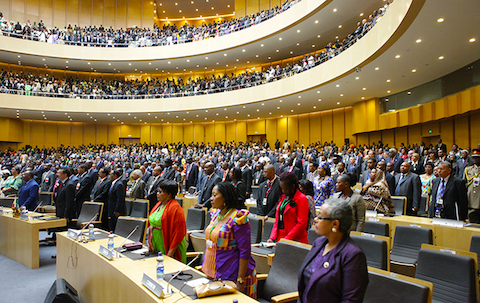
The Assembly of Heads of State and Government of the African Union (AU) at its 39th Ordinary Session held on 14 February 2026, in Addis Ababa, Ethiopia, has adopted as theme for the year, “Assuring Sustainable Water Availability and Safe Sanitation Systems to Achieve the Goals of Agenda 2063.”
As leaders and citizens rally together, in the pursuit of a healthier and more prosperous Africa, to take center stage, and bring hope and opportunity to millions of its citizens, the African Union will prioritize sustainable water and sanitation systems for 2026, as a pivotal step towards realizing the health aspiration of Agenda 2063.
This theme underscores the critical importance of water and sanitation in driving Africa’s development agenda and addressing the continent's pressing challenges. The adoption of the Africa Water Vision 2026 will help foster a strategic framework towards inclusive and climate resilient water security on the continent, paving the way for integrated water resources management within the Water, Energy, Food and Ecosystems (WEFE) nexus framework, which will in turn, promote a new narrative on water that fosters an appreciation of the vitality of water in economic growth; job creation; and industrialisation, among others. The Department of Agriculture, Rural Development, Blue Economy, and Sustainable Environment (ARBE), which is responsible for promoting sustainable agricultural development, rural economy growth, and environmental sustainability across Africa, is championing the implementation of the AU theme of the year 2026, in alignment with the AU Assembly Decisions.
The Africa Water Vision 2026 of “ an Africa where there is an equitable and sustainable management of water resources for poverty alleviation, socio-economic development, regional cooperation and the environment,” is timely, and in line with the AU vision of “an integrated, prosperous and peaceful Africa, driven by its own citizens and representing a dynamic force in the global arena”. A number of continental policy decisions and declarations have been taken by the AU to foster actualisation of these visions including the Africa Agenda 2063. The continental Agenda provides the framework and roadmap to achieve the aspirations on accelerated agricultural growth and transformation for shared prosperity and improved livelihoods, recommitting to the principles and values of the Comprehensive Africa Agricultural Development Programme (CAADP), and enhancing investment finance in agriculture, and intra-African trade in agricultural commodities, among others.
Climate Change, Water Security, Health and Sanitation
As Africa continues to grapple with the impacts of climate change, including increased droughts and flooding, the need for sustainable water management has never been more urgent. According to the World Health Organization (WHO), waterborne diseases remain a leading cause of mortality in Africa. To protect the interests of the African population, the AU is determined to improve access to safe sanitation facilities, particularly in rural and underserved urban areas and enhance water resource management for food security, economic stability, and resilience against climate-related challenges.
The AU’s 2026 theme serves as a clarion call for action across the continent. It stresses that achieving sustainable water availability and safe sanitation systems is not just an environmental issue but a pathway to achieving broader socio-economic goals. Member States, civil society, and the private sector are urged to collaborate in addressing these challenges. The AU urges member states to engage local communities in planning and implementing water and sanitation projects. This participatory approach is seen as vital for ensuring the sustainability and effectiveness of initiatives, as the AU advocates for robust policy frameworks to monitor progress and adapt strategies while monitoring the evolving water and sanitation conditions on the continent.
The theme on water and sanitation further calls for enhanced regional cooperation in managing transboundary water resources. Many of Africa's rivers and lakes cross national borders, necessitating innovative technologies for water purification, need collaborative approaches to ensure equitable and sustainable solutions for water and sanitation.
Water scarcity and inadequate sanitation are pervasive issues across Africa, affecting millions and stifling economic growth. The AU’s focus is to galvanize member states and stakeholders to prioritize these fundamental areas, in alignment with the broader aspirations of Agenda 2063, which seeks to foster inclusive and sustainable development by 2063.
The AU is in the process of developing an all-inclusive implementation strategy on the theme for the year 2026 on water and sanitation, featuring innovative solutions, youth, women, and marginalized communities, recognizing their critical role in driving sustainable change and share best practices. Hence the need to advocate for a new narrative on water that resonates with the expectations of the African citizenry. A narrative that recognizes the full potential of water in the socio-economic development of Africa, given that three out of four jobs are water-dependent and up to 80% of ailments impacting on the productivity of the labour force in Africa can be attributed to poor hygiene and sanitation. Water scarcity and supply disruptions limit economic growth. Exacerbated by climate change, water scarcity is also a contributing factor to migration while the transition to a greener economy enhances opportunities for decent jobs, etc).
The new narrative on water will therefore foster an appreciation of the vitality of water in economic growth, job creation, and industrialization. It would raise the business case and profile of water in national and regional development, position water better in the economy, accelerate the pace of water infrastructure investments. It will also increase awareness of water’s critical role in enhancing job creation and build on the foundations of integrated water resources management, to advocate for approaches such as the water-energy-food-ecosystem nexus.
Ms. Esther Azaa Tankou | Head, Media and Information Division, Communication Adviser, Permanent Observer Mission of the AU to the UN | Information and Communications Directorate | E-mail: yamboue@africanunion.org Tel: +251911361185 / +1 3478127195 (WhatsApp)

Media

Department Resources
In line with the Africa Regional Strategy for Disaster Risk Reduction
November 2017
Strategic Intervention Axis 1: Enhancing leadership, governance and political commitment
The African Union Commission (AUC) envisions “an integrated continent that is politically united based on the ideals of Pan Africanism an
Highlights of the cooperation with the GIZ-project “Support to the African Union on Migration and Displacement”
Violent extremism is a global issue.
Agenda 2063 is Africa’s development blueprint to achieve inclusive and sustainable socio-economic development over a 50-year period.
Mapping Exemplars of Good Practice In Foundational Literacy and Numeracy in AU Member States