




Ressources
The Africa Governance Report 2025 (AGR25) is the fourth report produced by the African Peer Review Mechanism (APRM) on behalf of the Afri

L'UA offre des opportunités passionnantes pour s'impliquer dans la définition des politiques continentales et la mise en œuvre des programmes de développement qui ont un impact sur la vie des citoyens africains partout dans le monde. Pour en savoir plus, consultez les liens à droite.

Promouvoir la croissance et le développement économique de l'Afrique en se faisant le champion de l'inclusion des citoyens et du renforcement de la coopération et de l'intégration des États africains.

L'Agenda 2063 est le plan directeur et le plan directeur pour faire de l'Afrique la locomotive mondiale de l'avenir. C'est le cadre stratégique pour la réalisation de l'objectif de développement inclusif et durable de l'Afrique et une manifestation concrète de la volonté panafricaine d'unité, d'autodétermination, de liberté, de progrès et de prospérité collective poursuivie par le panafricanisme et la Renaissance africaine.

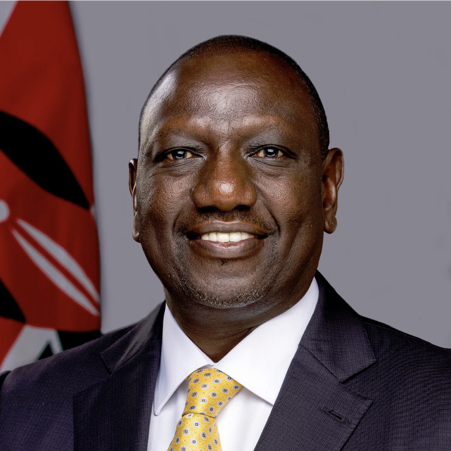
S.E. le Président William Samoei Ruto (PhD), Président de la République du Kenya et Champion de l'Union africaine pour la réforme institutionnelle. S.E. Ruto a été nommé lors de la 37ème Conférence des chefs d'État et de gouvernement en février 2024 pour promouvoir le processus de réforme institutionnelle de l'UA, succédant à S.E. Paul Kagame, Président de la République du Rwanda, qui a dirigé la mise en œuvre du processus de réforme depuis 2016.


L'UA offre des opportunités passionnantes pour s'impliquer dans la définition des politiques continentales et la mise en œuvre des programmes de développement qui ont un impact sur la vie des citoyens africains partout dans le monde. Pour en savoir plus, consultez les liens à droite.
The Peace Fund was established in 1993 as the principal financing instrument for the peace and security activities of the Organization for African Unity and was launched on November 17th November 2018 at the AU Headquarters in Addis Ababa
The Peace Fund is one of the five pillars of the African Peace and Security Architecture (APSA). The overall legal basis for the Peace Fund is set out in Article 22 of the Protocol on the Establishment of the Peace and Security Council.
In July 2016, the AU Assembly of Heads of State and Government decided to endow the Peace Fund with $400m in Member State contributions to be drawn from the 0.2% levy that has been instituted to finance the overall African Union budget. The full endowment level will be reached in 2021.
Since 2017, the Fund has received the highest levels of Member State contributions (currently over $55.9m) since the establishment of the Fund in 1993.
The AU Assembly decided to structure the Peace Fund around three thematic windows:
Governance and Management Structure
A Board of Trustees, made up of five African members representing the 5 AU Regions and two international partners will be established. The role of the Board of Trustees is to ensure strategic coherence and enhanced governance, financial and administrative oversight of the Peace Fund.
In addition to these African members, the European Union and the United Nations will occupy two seats on the Peace Fund Board that have been allocated for international partners.
The Chairperson of the AU Commission, supported by an Executive Management Committee will provide strategic management oversight of the Fund.
An Independent Evaluation Panel will be established to regularly review the effectiveness and impact of the Fund.
A Fund Manager will manage the finances and a Peace Fund Secretariat will manage the day to day operations of the Fund.
Board of Trustees
The Trustees, who represent the five regions of the continent, are:
The Africa Governance Report 2025 (AGR25) is the fourth report produced by the African Peer Review Mechanism (APRM) on behalf of the Afri
