










African ministers rally more action to bridge the digital divide and inequalities.
African ministers rally more action to bridge the digital divide and inequalities.
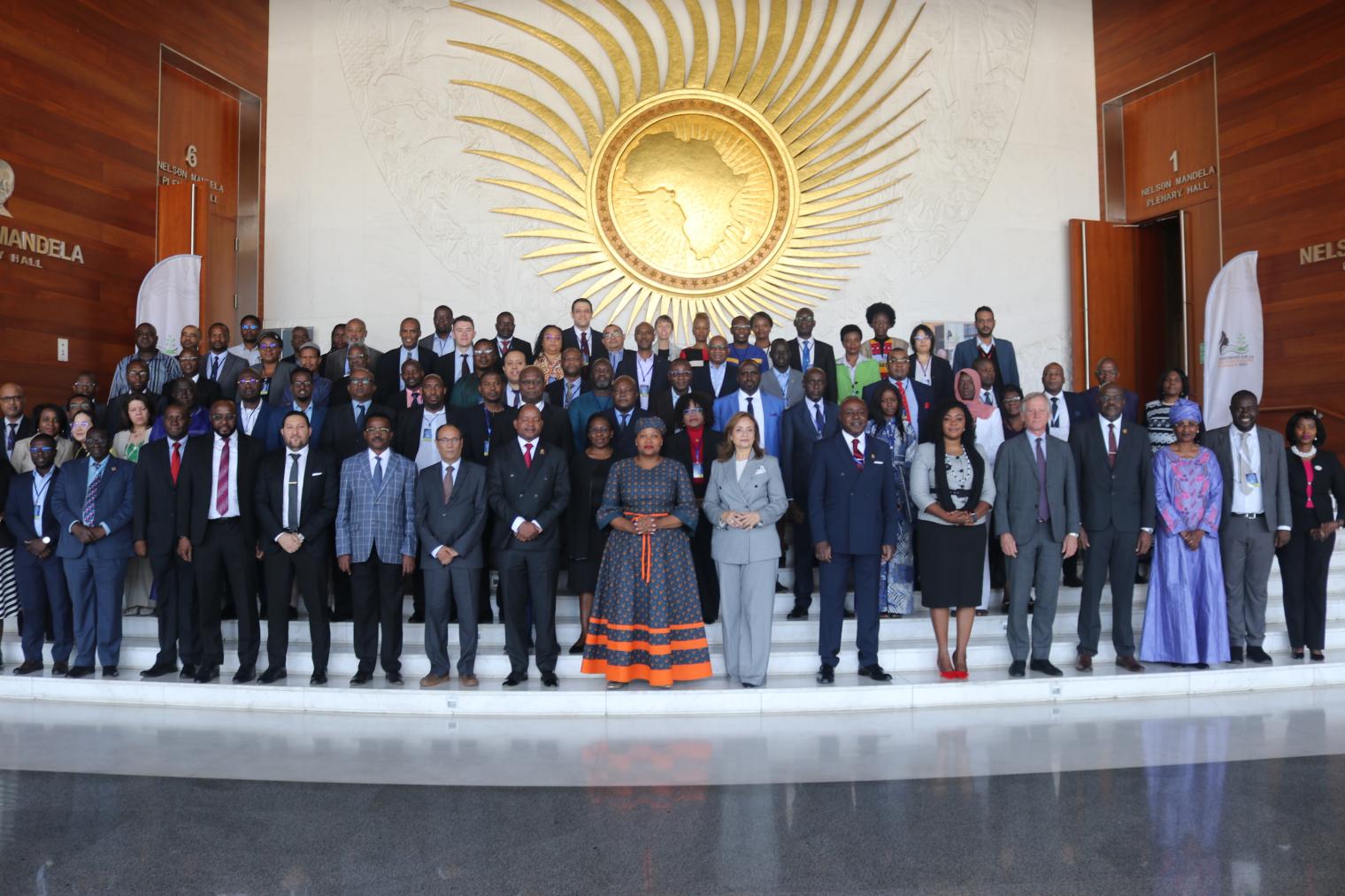
Ministers in charge of Communication and Information Communication Technology sectors have adopted far-reaching decisions to accelerating Africa’s Digital Transformation and boost socio-economic development, create jobs and improve people’s lives. At the just concluded 5th Specialized Technical Committee (STC) on Communication and Information Communication Technology (ICT), the ministers committed to promote the nexus between digitalisation, climate change, infrastructure, and energy to maximise the benefits of digital solutions. At the African Union Summit in 2024, the ministers will also rally for the adoption of the Digital Transformation Strategy for Africa & its Implementation Framework as a flagship project of the AU Agenda 2063.
The viability of the media industry also topped the agenda of the ministers as they explore avenues to ensure the media industry benefits of the booming technological growth. They also underscored the importance of securing press freedoms and a conducive environment that allows for media to reframe the African narrative with solutions-oriented perspectives.
At the STC, the Ministers committed to rally more actions to among others;
- Support implementation of Continental Digital Strategies and Frameworks adopted by AU Policy Organs.
- Pursue more ratifications of the AU Convention on Cybersecurity and Personal Data Protection which entered into force on 08th June 2023.
- Provide regular reports using the Digital Transformation Strategy performance and reporting dashboard and implement the Self-Capacity Assessment Tool for technical support to develop national data policies and systems aligned to the Continental Data Policy Framework.
- Develop National Child Online Safety and Empowerment Policy in line with the continental policy framework.
- Include provisions on data flows in the negotiations of AfCFTA protocols on Digital Trade.
- Strengthen cooperation between national communication and ICT regulatory authorities in Africa to collectively respond to new challenges emanating from the increased convergence of services. This will also enhance capacity building programs on ICTs and cybersecurity in the continent.
- Pursue the policy and regulatory reforms of the postal sector at national, regional and continental levels
- Connect the unconnected to bridge the urban-rural digital divide and close the gender gaps to ensure an inclusive digital society and economy.
- Champion the implementation of policies that pursue equitable sharing of revenues by Tech Giants to ensure African media and content creators’ sustainability and viability.
- Promote the culture of reading in Africa and invest in Libraries in educational institutions and local communities as well as the promotion the inclusion in national curricula, information about the African Union, its mandates and programmes and to popularise awareness and adoption of Africa’s Agenda 2063 with youth.
- Encourage the use of African sourced data to measure the state of media and journalists on the continent and promote access to Information through the establishment of Information Commissions within member states
- For the African Commission on Human and Peoples' Rights to undertake a 10-year review and update of the 2013 African Model Law on Access to Information, to ensure compliance with the 2019 Declaration of Principles on Freedom of Expression and Access to Information in Africa, and particularly to make it fit for purpose in the digital age.
- Continue to mobilize and allocate more domestic financial and technical resources for the preparation and implementation of PIDA-PAP 2 projects and create an enabling environment for the private sector and public-private partnerships, build institutional capacities and implement the necessary policies and regulatory frameworks to facilitate the implementation of PIDA-PAP 2 projects.
To scale up startup investments across the continent to continue growing tech entrepreneurs, the AU Commission will develop the African Green Digital Transformation Pact that promotes data-driven technology projects and initiatives that support environmental quality improvement, climate action, energy efficiency, and bolster resilience while promoting citizens engagement. The Pact will inform the deliberations of the Global Digital Compact scheduled for 2024.
H. E. Léon Juste Ibombo, Congo’s Minister of Post, Telecommunication and Digital Economy of Rep of Congo, and Outgoing Chair of the STC-CICT emphasized the need for more investment in digital infrastructure, easier access to affordable devices and internet tariffs, and policies that promote digital literacy and entrepreneurship. “While progress has been made in expanding internet access and promoting digital skills, we need to scale up our efforts to tap into the opportunities of Digitalization.
H.E. Dr Amani Abou-Zeid, AU Commissioner for Infrastructure and Energy noted that as Africa continues to endure the impact of global crisis, digitalization offers numerous opportunities for economic transformation towards a path of green, resilient, and inclusive growth. She underscored the nexus between digital transformation, climate, food and energy and called for more efforts to scale up access to climate-smart digital technologies, and associated data-driven services across all sectors. “For example, with only 40% of the continent’s population using internet 64% of which are urban and 23% rural, the nexus between energy and digitalization needs to be given more attention as part of the efforts to bridge the urban rural digital divide as lack of access to electricity in rural areas contributes to this divide. The African Union is implementing various initiatives aimed at accelerating energy access which will in turn contribute to higher levels of digital services among other benefits.”
Doreen Bogdan-Martin, Secretary-General of the International Telecommunication Union, called for universal connectivity to realize inclusive and sustainable digital ecosystem. “Connectivity is an important policy goal, and it enables economic development and access to education. Digital transformation affects all sectors in aspect of our lives, and we have seen these past few years, there’s need for a whole of government approach to drive digital transformation in partnership with the private sector, academia, development, partners, and all the African citizenry. We will continue to provide extensive guidance in the development digital policies and strategies, regulatory environments, global standards, best practices to drive innovation and increase access to digital services by all.”
Amb. Riccardo Mosca, Deputy Head of European Union Delegation to African Union highlighted the impact of collaboration in the implementation of the digital transformation Strategy including the sectorial strategies on education, health, and agriculture. He committed EU’s support as Africa implements the policies and strategies in Single Digital Market, human centric artificial intelligence and Internet governance, and cyber security.
The energy sector also stands to gain from digitalisation enhancing the operational efficiency of the energy systems as well as riding on innovative digital solutions to improve business process and enhance customer experience. Facilitating access to modernised and integrated transport infrastructure systems through digitalization is also among critical underscoring the need for digitalisation to improve efficiency and performance of transport systems. This includes the development of smart urban mobility solutions in cities to cope with the increasing traffic growth, promotion of smart intelligent systems for road transport. By embracing smart technologies and adopting best practices, African airports can enhance security measures, optimize passenger processing, and contribute to the growth of the aviation industry.
Visit https://au.int/en/5thstccict for more details about the STC on Communication and ICT.
For more information:
Ms. Bezayit Eyoel| Department of Infrastructure and Energy| African Union Commission| Mobile: +251913223288 | E-mail: BezayitE@africa-union.org|
Ms. Doreen Apollos | Communication | Directorate of Information and Communication| African Union Commission | E-mail ApollosD@africa-union.org
Information and Communication Directorate, African Union Commission I E-mail: DIC@africa-union.org
Web: au.int | Addis Ababa, Ethiopia | Follow Us: Facebook | Twitter | Instagram | YouTube

Ressources
Agenda 2063 is Africa’s development blueprint to achieve inclusive and sustainable socio-economic development over a 50-year period.
The African Union Commission (AUC), through the Department of Health, Humanitarian Affairs and Social Development, has launched the S